The district plays a vital role in the region’s economy due to its proximity to the Port of Los Angeles and significant transportation infrastructure. CD 15 is defined by its working-class character, diverse population, and strong community identity.
The district’s parks serve as crucial spaces for recreation, environmental access, and cultural gathering—especially in areas where green space is limited and environmental burdens are high. Residents face persistent challenges related to air quality, industrial pollution, and inadequate tree canopy coverage. Despite these challenges, there is strong community interest in revitalizing parks with improvements to safety, accessibility, and programming. Priorities include climate resilience, increased shade, equitable access to resources, and opportunities for youth and families to gather, play, and thrive.
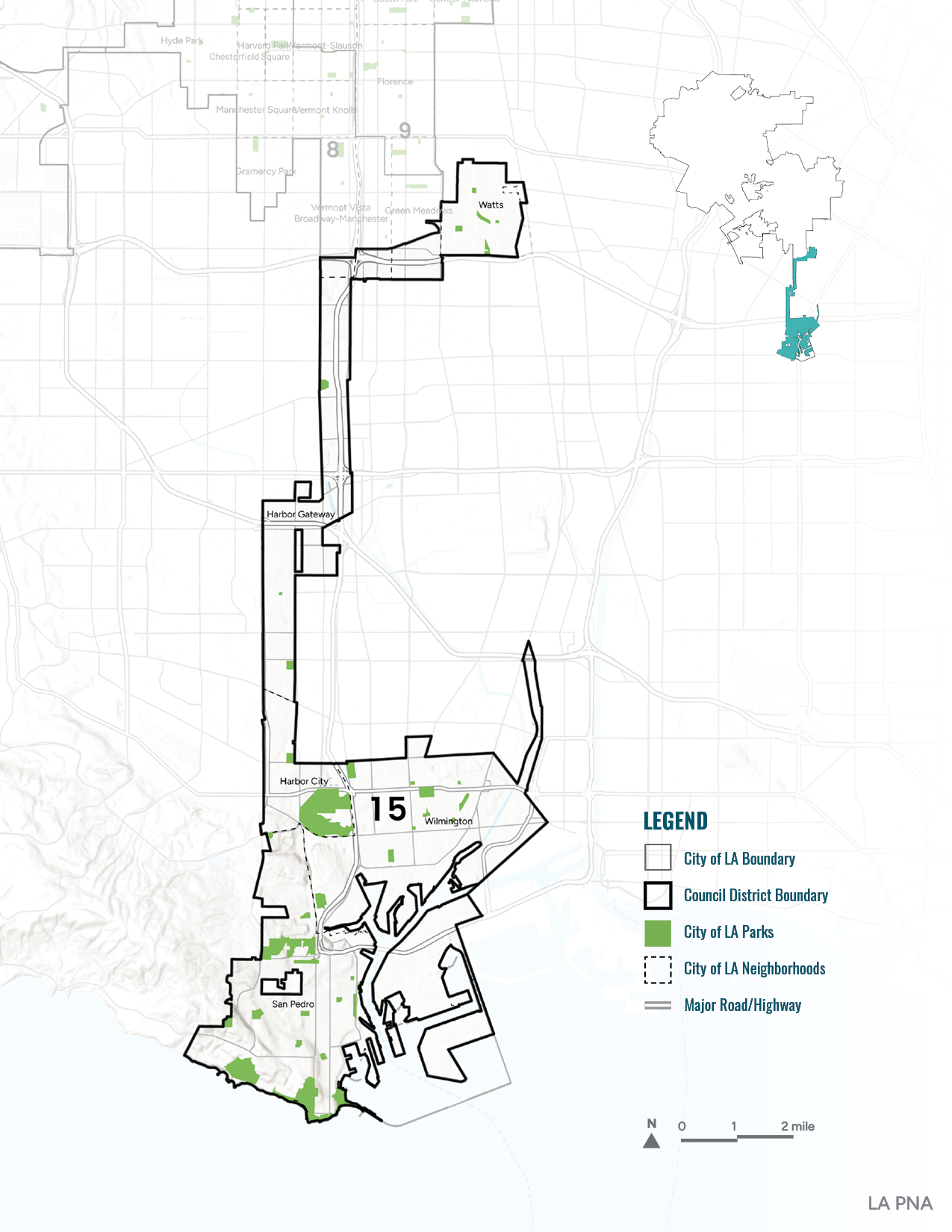
Population projections for 2050 show slight growing populations in neighborhoods like San Pedro and parts of Harbor Gateway, while neighborhoods like Harbor City and Wilmington are expected to see an overall population decline.
Council District 15 Neighborhoods
At a Glance
Top 3 Languages Spoken
Spanish, English, Other Asian and Pacific Island Language
What we heard
Current and Future Needs: Survey Results
CD 15 respondents feel more positive than the city as a whole about the physical condition of both City of LA parks and recreation centers.
Parks
Recreation Centers
Almost two-thirds of CD 15 respondents feel that there are enough parks and/or recreation centers within walking distance of their homes.
Most CD 15 respondents have visited a City of LA park in the past year, while only about half have visited a City of LA recreation center.
Parks
- 89%Have Visited
- 11%Have Not Visited
- 10%Daily
- 34%Weekly
- 34%Monthly
- 10%Yearly
-
1%Less
than Once a Year
Rec Centers
- 56%Have Visited
- 44%Have Not Visited
- 2%Daily
- 16%Weekly
- 24%Monthly
- 10%Yearly
-
4%Less
than Once a Year
About half of CD 15 respondents support a bond, levy, or tax to fund parks and recreation facilities.
Top 3 Most Important...
Outdoor Facilities
- Unprogrammed green spaces
- Paved, multi-use trails
- Natural areas & wildlife habitats
Indoor Facilities
- Walking/jogging track
- Exercise & fitness equipment
- Swimming pool
Programs
- Fitness/wellness programs
- Youth & family; Arts & crafts classes
- Special events/festivals