Investment in LA’s park system has fallen since the Great Recession, leading to a funding crisis (See Chapter 5: Current Budget and Finance). A vital component of this Park Needs Assessment is laying out the financial investment required to maintain, enhance, and expand the City’s parks and recreational amenities. Planning-level cost estimates for new facilities, maintenance, and staffing needs in addition to innovative funding strategies, are outlined as a roadmap to a resilient, equitable, and thriving Los Angeles park system.
Planning-Level Cost Assumptions and Estimates
The PNA includes a rough order-of-magnitude estimate of the dollar amount needed to maintain, refresh, and build new parks and recreational amenities, facilities, and infrastructure across the City over the next 25 years as well as meet staffing and operational needs.
METHODOLOGY
The PNA’s capital cost estimate is based on assumed costs for new parkland, construction of new amenities, replacement of existing amenities, repair of existing amenities, and maintenance of existing amenities. These assumed costs are based on:
Costs were developed for the over 30 amenities inventoried in RAP’s annual Park Conditions Assessment, as well as other priority park facilities and landscapes that impact the overall quality and character of the parks system. The elements are categorized into:
There are costs associated with maintaining, completing a minor refresh of, completing a major refresh of, or adding each of these elements.
Maintain
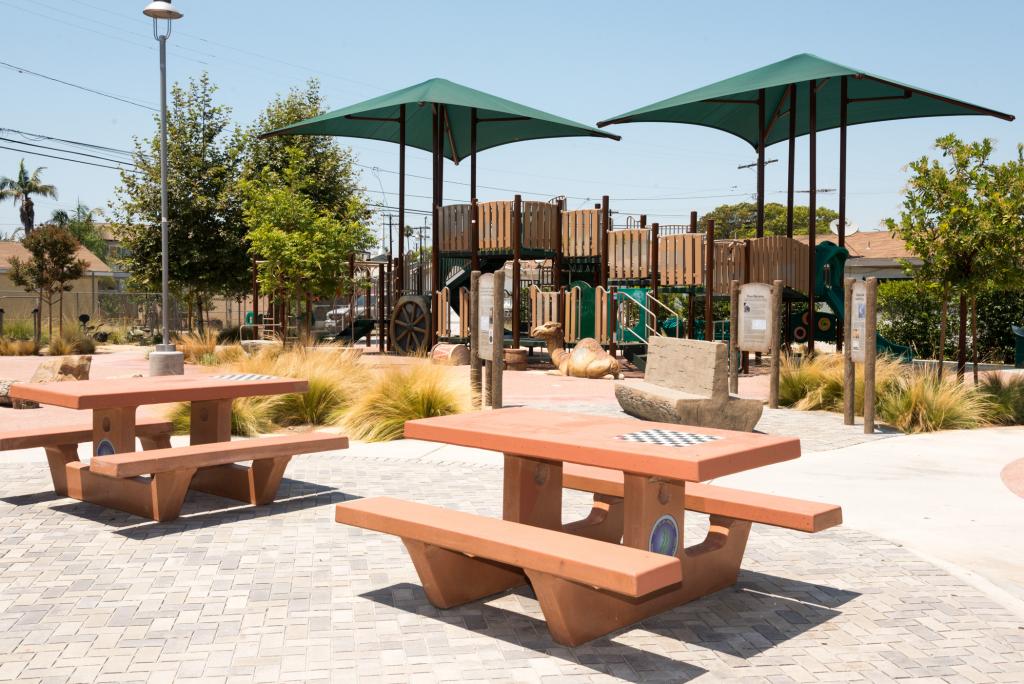
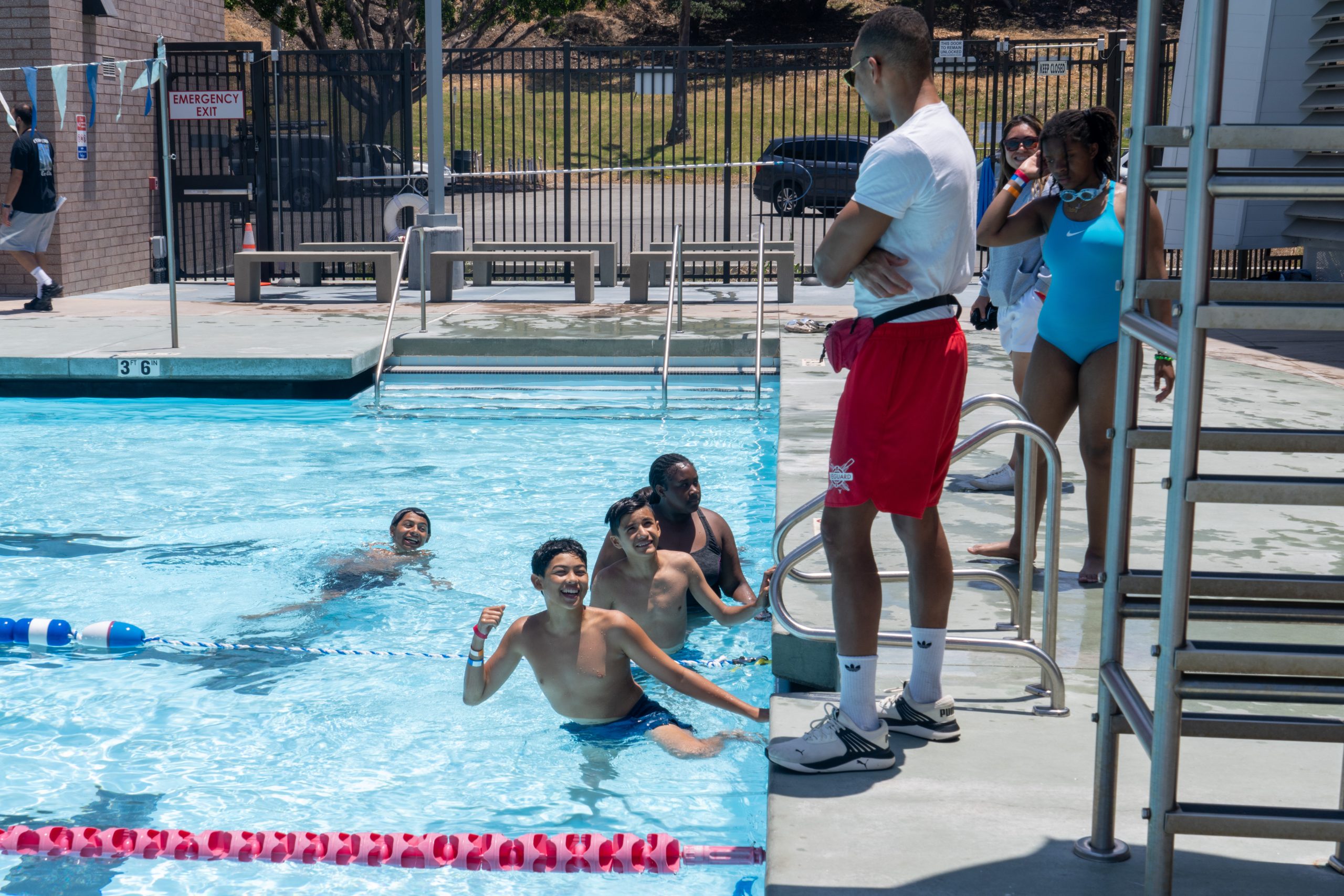
An amenity is in good condition, is fully functional, and does not need repairs. The amenity should be maintained to keep it in a good state of repair. Amenities in good condition encourage park use.
Major Refresh
An amenity is in poor condition, is largely or completely unusable, and requires major repairs to be functional. Amenities in poor condition discourage park use.
Minor Refresh
An amenity is in fair condition and is functional but needs minor or moderate repairs. Some elements of the amenity need to be refreshed. Amenities in fair condition can still be used, but may slightly discourage park use.
New Facility
A new facility must be built to meet a need in the overall system.
Types of Cost, Assumptions, and Approach
Capital Estimates
Standardized costs were applied to the actual conditions of park amenities at each park site, as assessed by RAP, to arrive at project costs citywide through the year 2050. For amenities or elements that do not have a specific assessment, such as individual benches, current and future needs were estimated for the next 25 years. For new facilities, counts were based on the proposed level of service (LOS) standards for RAP. For example, if RAP wants to increase its LOS for basketball courts to match peer cities, the number of new courts needed to meet the new LOS standard was used. This was also true for the total acres of new parks. In the case of new parks, new amenity costs were applied to each of the 36 New Park Priority Areas identified using the “PerSquareMile” tool (See Site Prioritization).
In addition to amenities, elements such as water and power support infrastructure, native habitat restoration or creation, and water bodies were considered in the cost estimate based on acreage or age of park.
The cost estimate also accounted for soft costs, such as design fees, for each of these projects as well. Soft costs for small projects are generally higher by percentage than large projects. This is due to the fact that regardless of the scale of the project, a certain level of project management and administrative work is required. For the purposes of this estimate, soft costs were averaged to 12%.
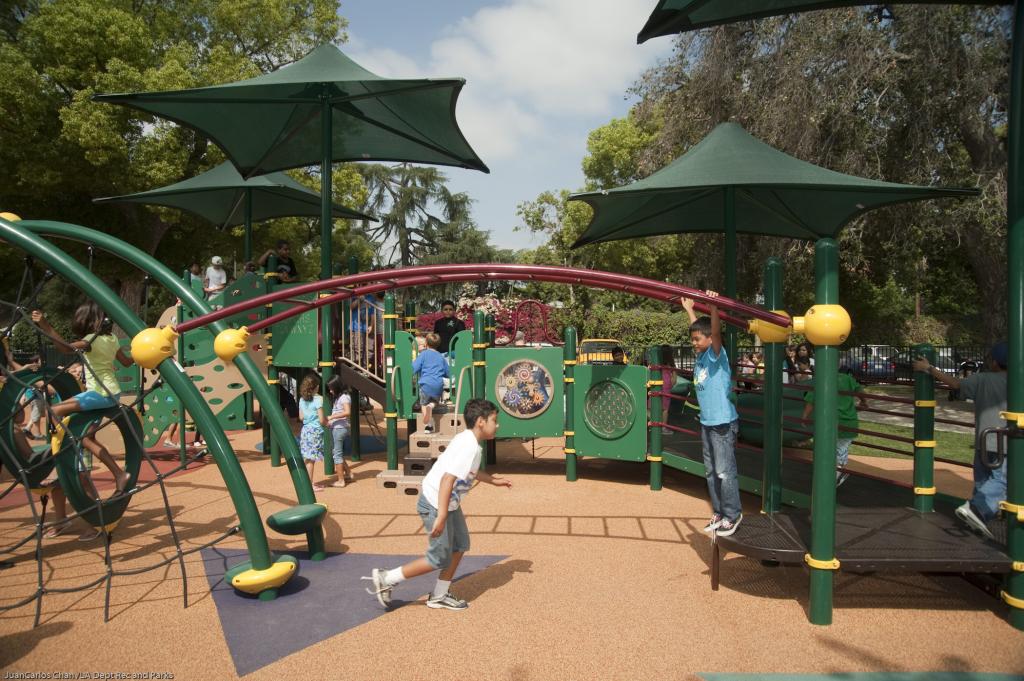
AMENITIES, HABITAT, AND SOFT COSTS ARE INCLUDED IN OVERALL COST CALCULATIONS.
Operations and Maintenance Estimates
Staff salaries on the maintenance and construction teams constitute a significant portion of RAP’s operations and maintenance costs. Currently, the Park Conditions Assessment, RAP staff, and community members all point to poor maintenance conditions in a high percentage of the City’s parks. This is largely due to reduced numbers of operations and maintenance staff despite the ever-expanding scale of the park system. In a growing city like LA, the operations and maintenance budget of the park system also needs to grow year to year. Over the past 25 years, this budget has not kept up with inflation or the growth of the system (See Current Budget and Finance).

Dogs socialize at the Whitnall Highway Park.
OVER THE PAST 25 YEARS, RAP’S OPERATIONS AND MAINTENANCE BUDGET HAS NOT KEPT UP WITH INFLATION OR GROWTH OF THE SYSTEM.
Personnel Estimates
- Increase Capacity to Provide A Higher Level of Service: Increasing capacity and level of service by half (150%) to meet anticipated demand and elevate overall service delivery.
- Staffing Consistent to Prior Staffing Levels: Returning staffing to RAP’s prior, known peak in FY2008, a total budget increase of 30%. RAP has not returned to those pre-recession staffing levels. Restoring full-time employee counts to the FY2008 peak would require a 139% increase. Restoring part-time employee counts would require a 110% increase.
- Increase Capacity to Align to Peers: Increasing staff per acre to align with peer systems (200%). Based on the average staff per acre against peer park systems, RAP would need to increase staff capacity by 200% to meet the service level of peers.
RAP COULD RESTORE STAFFING LEVELS, PROVIDE A HIGHER LEVEL OF SERVICE, AND ALIGN CAPACITY TO PEERS BY INCREASING ITS OPERATING BUDGET BY 60%.
Expense Estimates
Expense estimates assumed a salary-to-expense ratio of 20%, based on the historical average from RAP’s FY2015–FY2025 budgets. General fund reimbursement estimates were based on a salary-to-reimbursement ratio of 68% based on the FY2025 budget.
Based on this approach, RAP would need to increase its operating budget by 60% to increase staff capacity to a level more consistent with prior service levels, desired service quality, and peers.
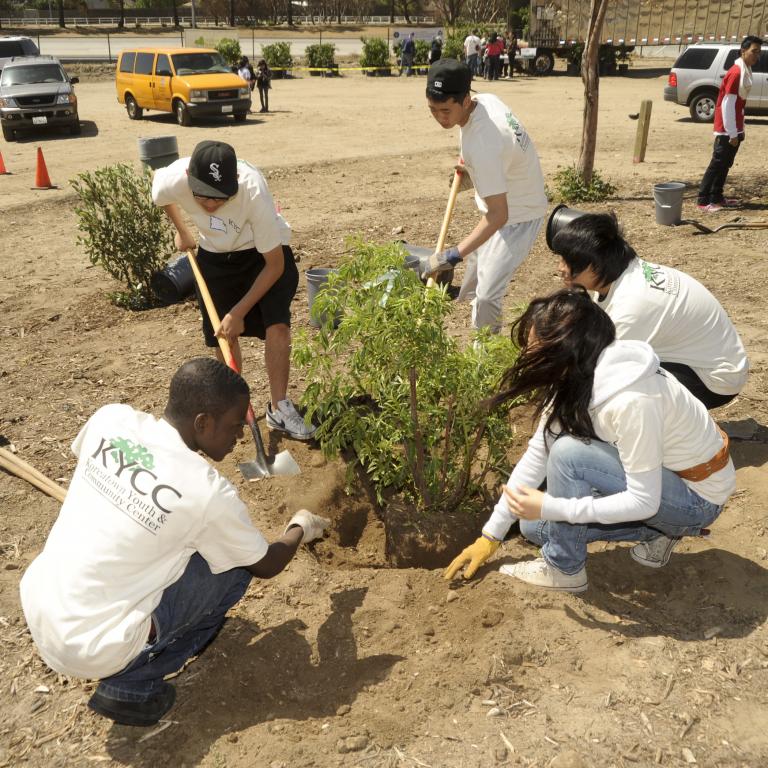
Personnel and Expense Estimate Summary
| Estimated Budgets | Full-Time Salaries | Part-Time Salaries | Misc. Salaries | Total Salary Budget | Expenses | Total Salary and Expense Cost | General Fund Reimbursement | Total Estimated Operating Costs | % Change from FY25 |
|---|---|---|---|---|---|---|---|---|---|
| Existing FY2025 | $126M | $54M | $4M | $184M | $39M | $223M | $125M | $348M | 0% |
| 1. Increase Capacity to Provide a Higher Level of Service | $190M | $82M | $5M | $276M | $58M | $335M | $188M | $523M | 50% |
| 2. Staffing Consistent to Prior Staffing Levels | $176M | $60M | $4M | $240M | $51M | $290M | $163M | $454M | 30% |
| 3. Increase Capacity to Align to Peers | $253M | $109M | $7M | $368M | $78M | $446M | $251M | $696M | 100% |
| Average | $206M | $83M | $6M | $295M | $62M | $357M | $201M | $558M | 60% |
Escalation
One of the most important elements of long-range cost planning is considering escalation year to year, which may vary for capital projects and for operations. If underestimated, projects further into the future of the PNA time horizon will be underfunded. The rate of escalation depends largely on market conditions.
Capital Projects: While average years may be in the 4–5% range for capital projects, during the COVID-19 pandemic and in recent years escalation rates for capital construction costs rose very quickly at rates approaching 10–12%. Escalation forecasts for 2025–2026 in the LA market are 6–9%, driven in part by fire rebuild efforts and events-related development (World Cup, Superbowl, Olympics) before stabilizing for 2027–2029 in the 3–6% range.1Dharam Consulting, “Los Angeles Construction Cost Note,” May 2025, 6.
Operations: The PNA assumed 3% annual escalation to project future operating costs based on inflation between 2015 and 2025 for goods according to the Bureau of Labor Statistics.
Cost Totals
The total budget takes into account facility conditions and deferred maintenance, desired new amenities, staffing needs, and operations and maintenance needs. Some costs recur annually, such as staffing. Other costs, such as new projects, are one-time costs that require ongoing operations and maintenance costs. The total budget can be broken down into one-time and annual costs. For new projects, completing them sooner will cost less as capital costs increase over time.
One Time Capital Need
(IN 2025 DOLLARS WITHOUT ESCALATION)
Deferred Maintenance
Deferred Maintenance is maintenance that was not performed as scheduled or as needed and was put off to a future time, often due to a lack of funds or resources. In the PNA this includes minor refreshes, major refreshes, and replacement of existing facilities. Replacing a broken bench at a park or repaving an existing basketball court would be considered deferred maintenance if it had been delayed longer than when the maintenance should have been completed. Deferred maintenance costs go up as maintenance activities are further delayed, and sometimes facilities that were fixable at one point become impossible to repair and must be replaced by a completely new facility because maintenance has been deferred so long.
Level of Service Goals
New Facilities to Meet Peer City Levels
This cost covers the addition of new facilities—such as park facilities like pickleball courts, architectural elements, trails, and infrastructure elements—to bring Los Angeles’ park system up to the median level of service among its peer cities.
New Park Acres to Meet Peer City Levels
This cost covers the addition of new park acres, including the 36 New Park Priority Areas and 26,000 additional acres, to bring Los Angeles’ park system up to the median level of service among its peer cities.
With such large goals, it is helpful to further break these costs into various lenses to better explore funding measures or strategies and to prepare for department budgeting.
| Additional Lenses to Explore Costs | |
|---|---|
| Total for 36 New Park Priority Areas identified using the “Per Square Mile” tool at approximately 3 acres, including land acquisition. | $1.3B* |
| Total needed to address the top 100 prioritized sites (based on a per acre average of the system cost) | $695M |
| Total needed to address the 25 first priority sites (based on a per acre average of the system cost) | $50.9M |
| Total needed to address the top 15 prioritized sites (based on a per acre average of the system cost) | $25.1M |
*Note: If these new parks can be realized on land already owned by a public entity, land donated for parks, or as Community School Parks where land acquisition costs are not needed, this number would be around less than half of this total.
Annual Operating Needs
(IN 2025 DOLLARS)
EXISTING BUDGET FY2025
ADDITIONAL BUDGET NEEDS
ESTIMATED TOTAL BUDGET
Total for Staff Increases Year 1 to Meet Staffing Gap
Costs for future staffing needs and associated personnel costs, including full-time, part-time, and miscellaneous salaries to maintain and supplement current staffing.
Total for Expenses (Year 1)
The annual costs required for equipment, technology, and contracts to keep facilities running, parks clean, and programs operational.
Total for General Fund Reimbursements (2026)
Reimbursement back to the City General Fund for expenses associated with City Employee Reimbursement System, Medicare, Employee Assistance, Civilian Flex programs, water, electricity, trash collection, and other related costs billed to the Department
This estimated addition of $209M annually would enable RAP to meet growing needs in staffing, operations and maintenance, and General Fund reimbursements for the Los Angeles park system, and is equivalent to 1.5% of the City of LA’s Fiscal Year 2026 operating budget.
| ESTIMATED ANNUAL OPERATING NEEDS WITH ESCALATION | |||
|---|---|---|---|
| 2025 Dollars | 2035 Dollars* | 2050 Dollars* | |
| TOTAL | $558M | $749M | $1.17B |
*Note: Estimated total operating budget in 2035 and 2050 dollars is based on an annual inflation rate of 3%, consistent with inflation between 2015 and 2025.
Sources
- 1Dharam Consulting, “Los Angeles Construction Cost Note,” May 2025, 6.