IN-PERSON COMMUNITY OPEN HOUSE MEETINGS
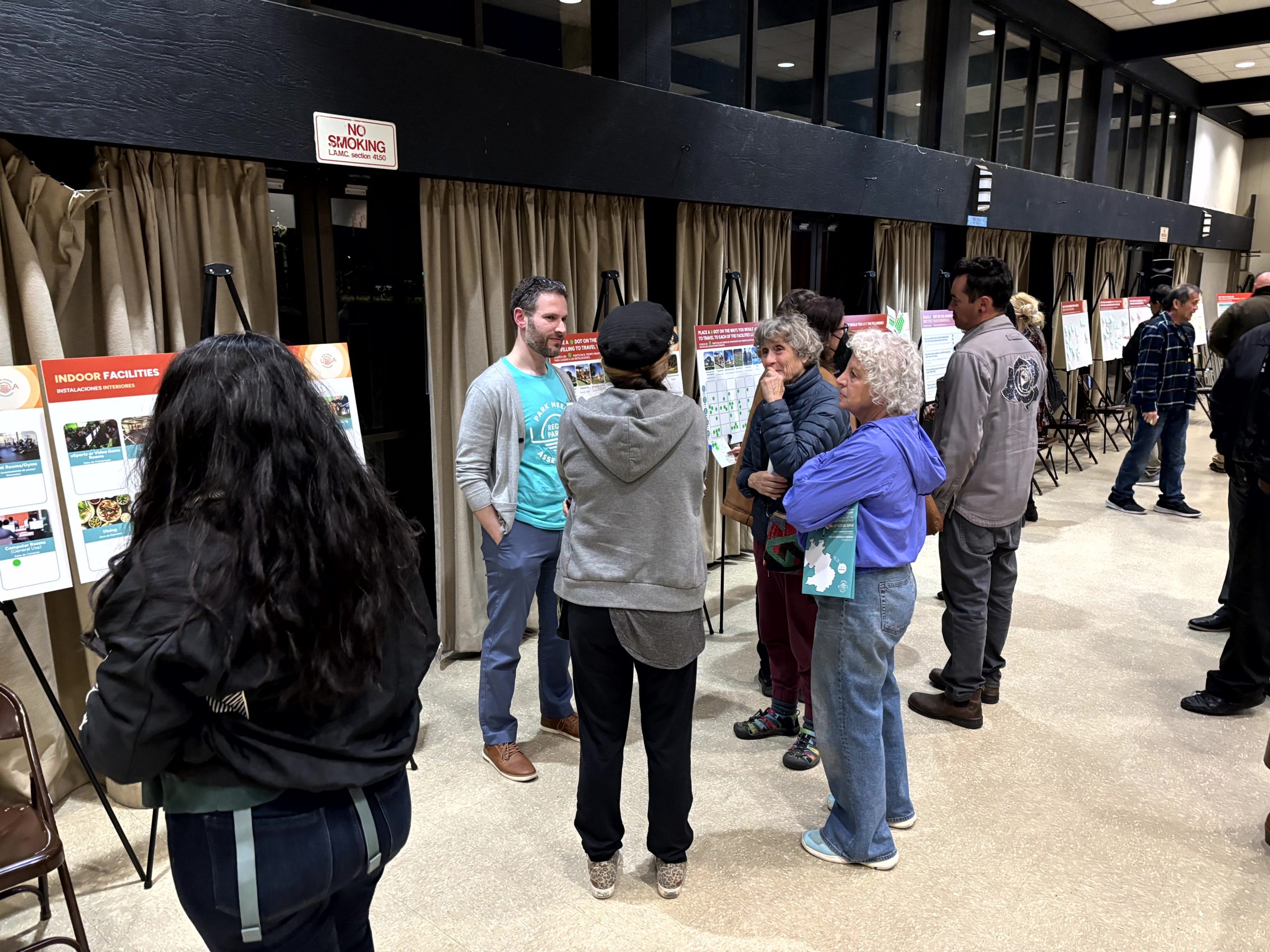
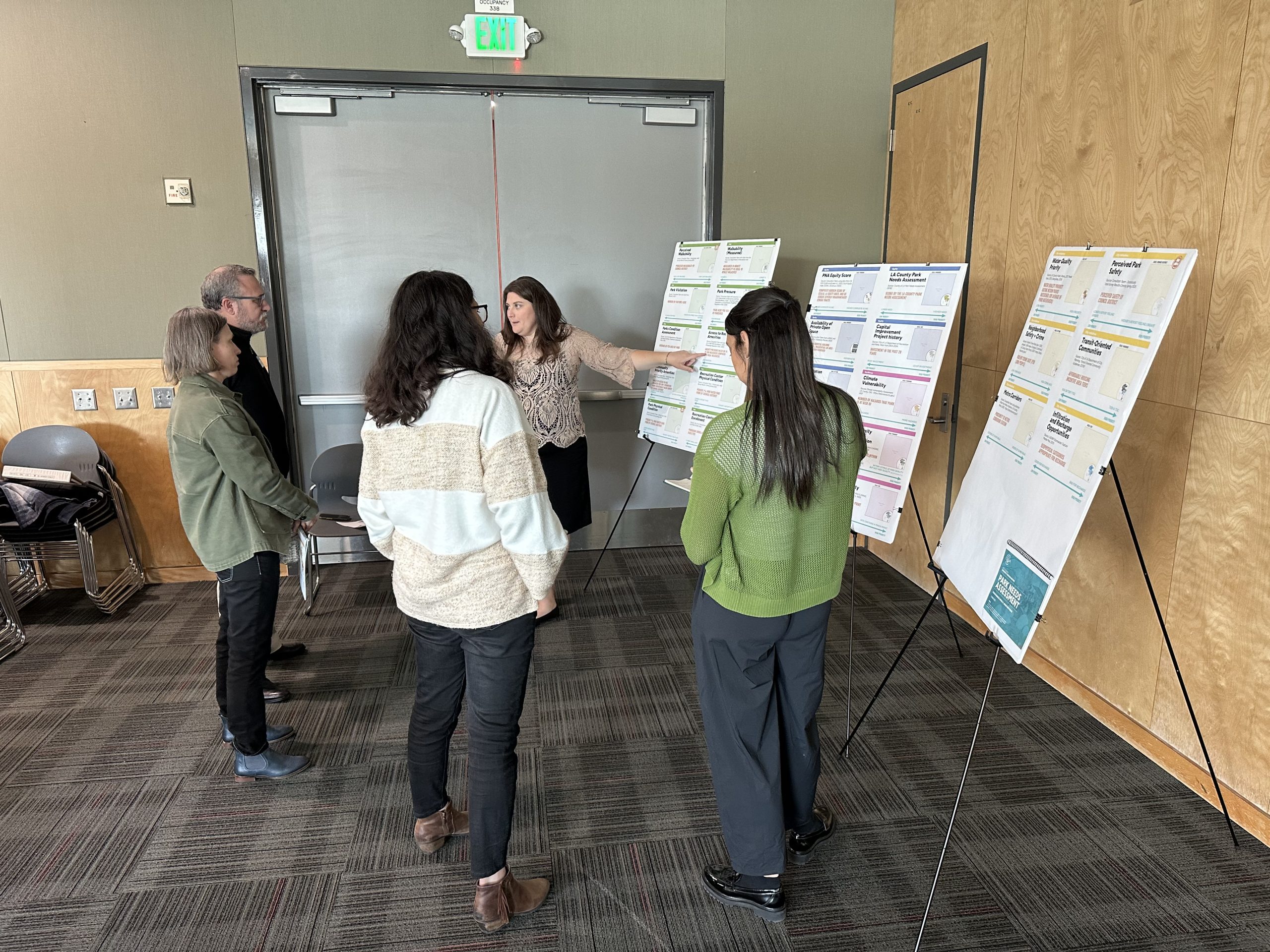
Twenty-three open house meetings followed an interactive format designed to encourage active involvement. After an introductory presentation, participants explored stations with informational and interactive boards. Informational boards provided participants with greater detail about the project. Interactive boards provided participants with opportunities to express their opinions and preferences. RAP staff and consultants were available to answer participants’ questions.
In-person open houses provide a forum for residents to give direct feedback and be in dialog with the project team.
Virtual Open-House Meetings
Virtual open houses provided a way for those unable to attend the in-person open houses to hear the same presentation from any location. Following the presentation, a moderated Q+A session gave participants the opportunity to ask questions and engage with the project content.
Additional deep-dive webinars during the Draft PNA phase provided community members a format to learn more detailed information about the PNA and ask the Project Team questions. These virtual open houses and webinars were made available on the PNA website and YouTube Channel.
Engagement Materials
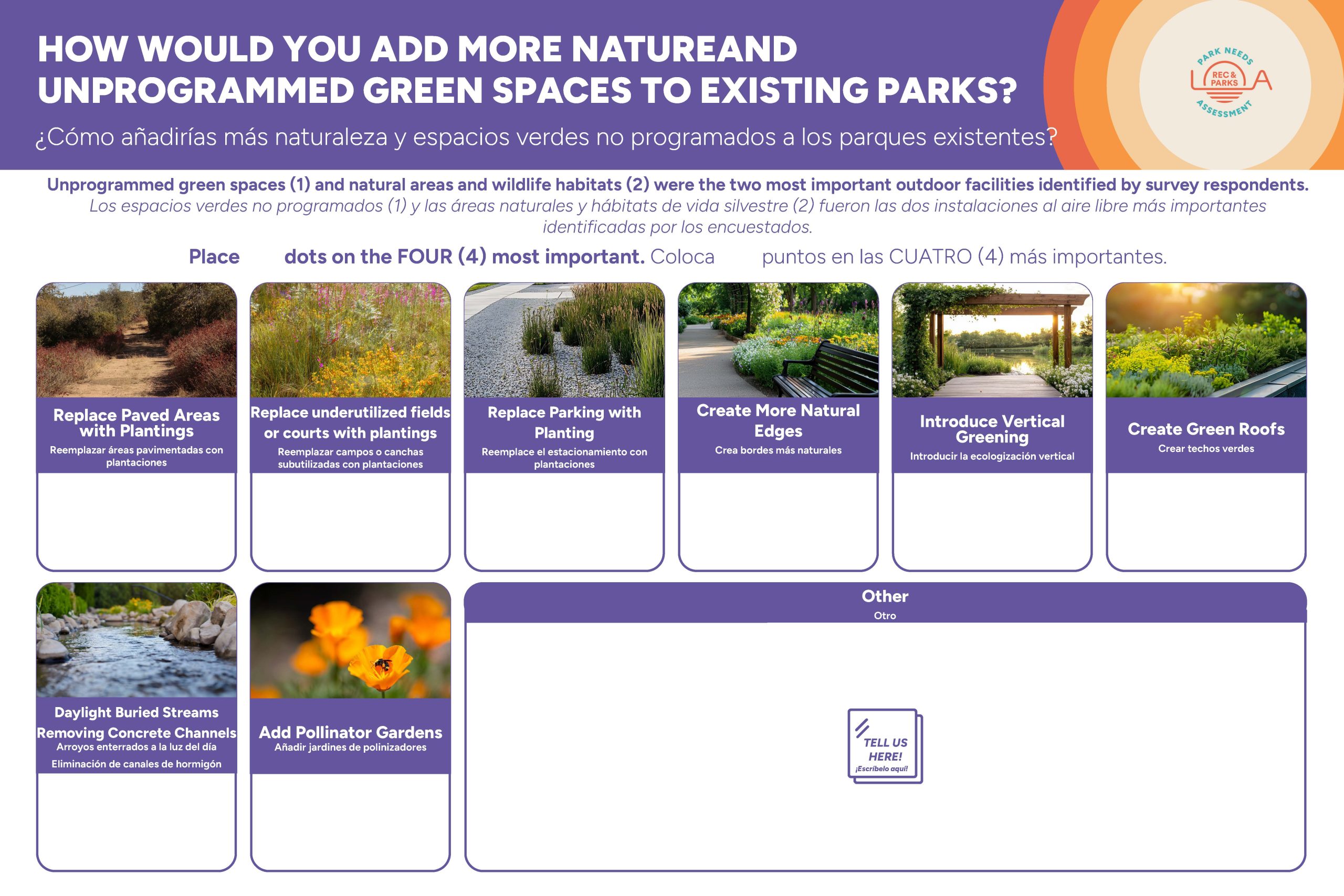
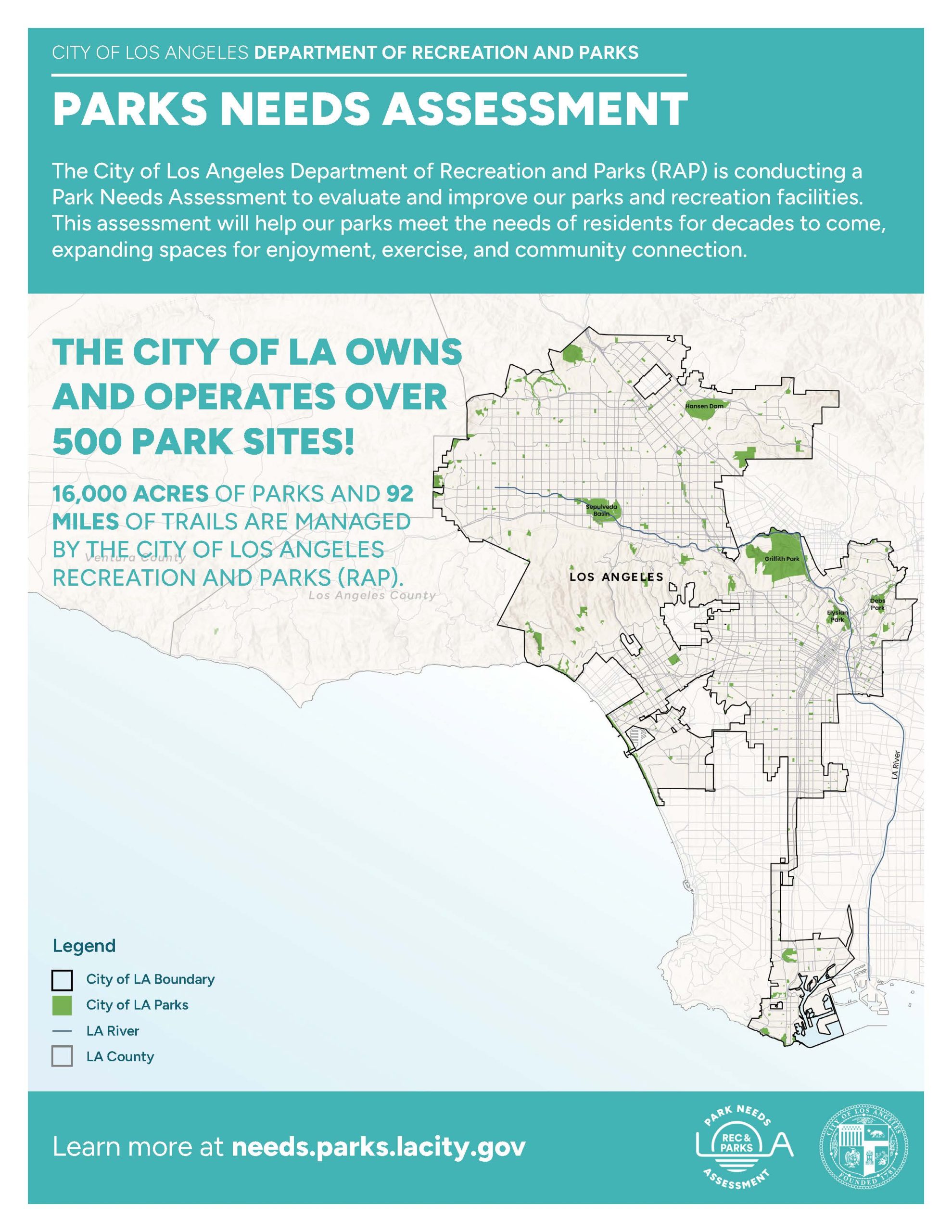
Materials provided at the meetings included informational and engagement project boards, project fact sheets, sticky notes, comment cards, and contact information. A large city map allowed participants to indicate where they live and parks they frequently use. Materials were available in English, Spanish, Mandarin, Korean, and Armenian.
Youth Focused Outreach
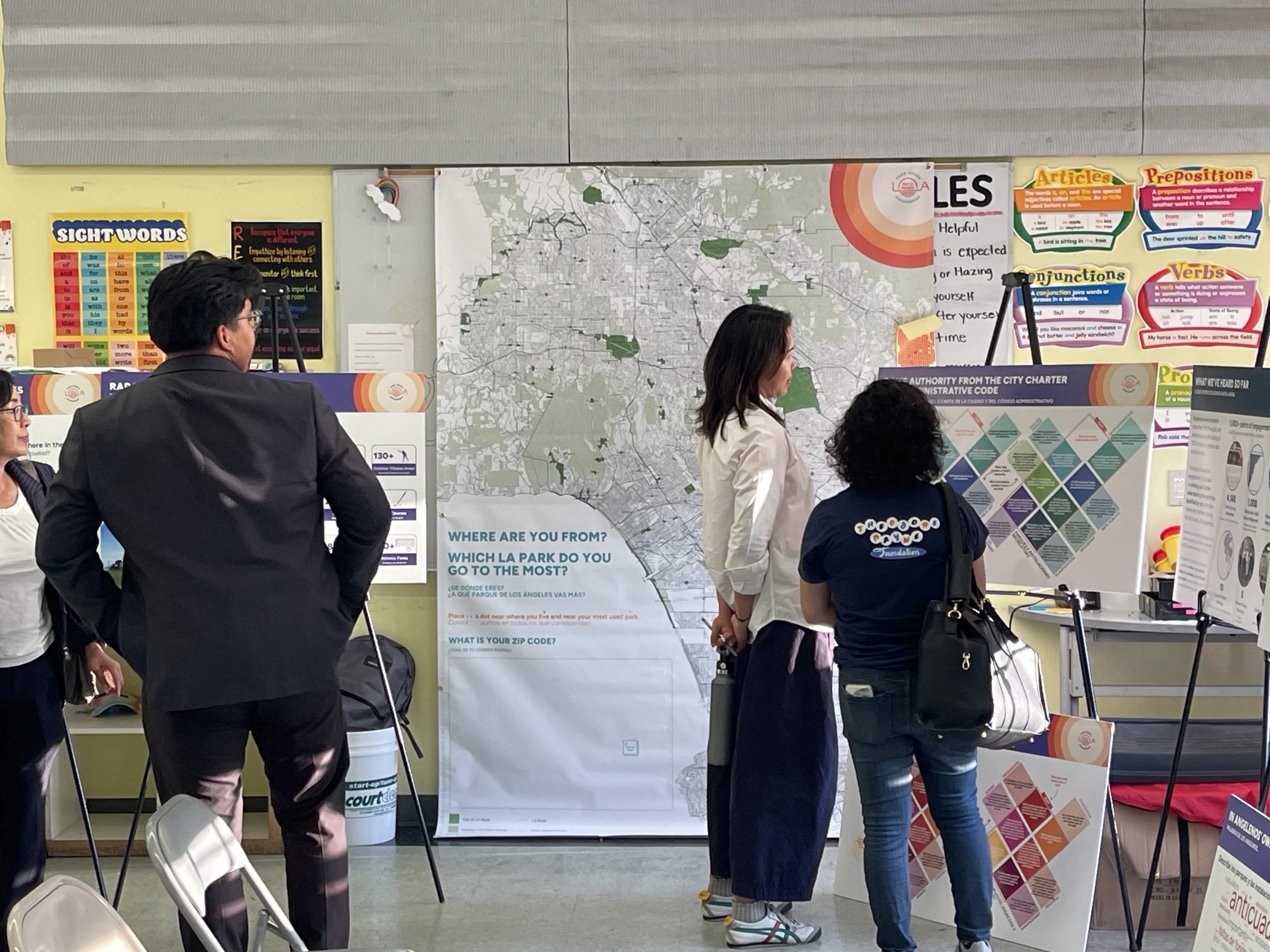
A youth advocacy workshop with the South East Asian Community Alliance at Alpine Recreation Center and several youth-centered pop-ups, including the LA Maker Faire and the YMCA Youth Recreation Day, allowed LA’s youngest park users (and future park stewards) and their parents to have their voices heard.
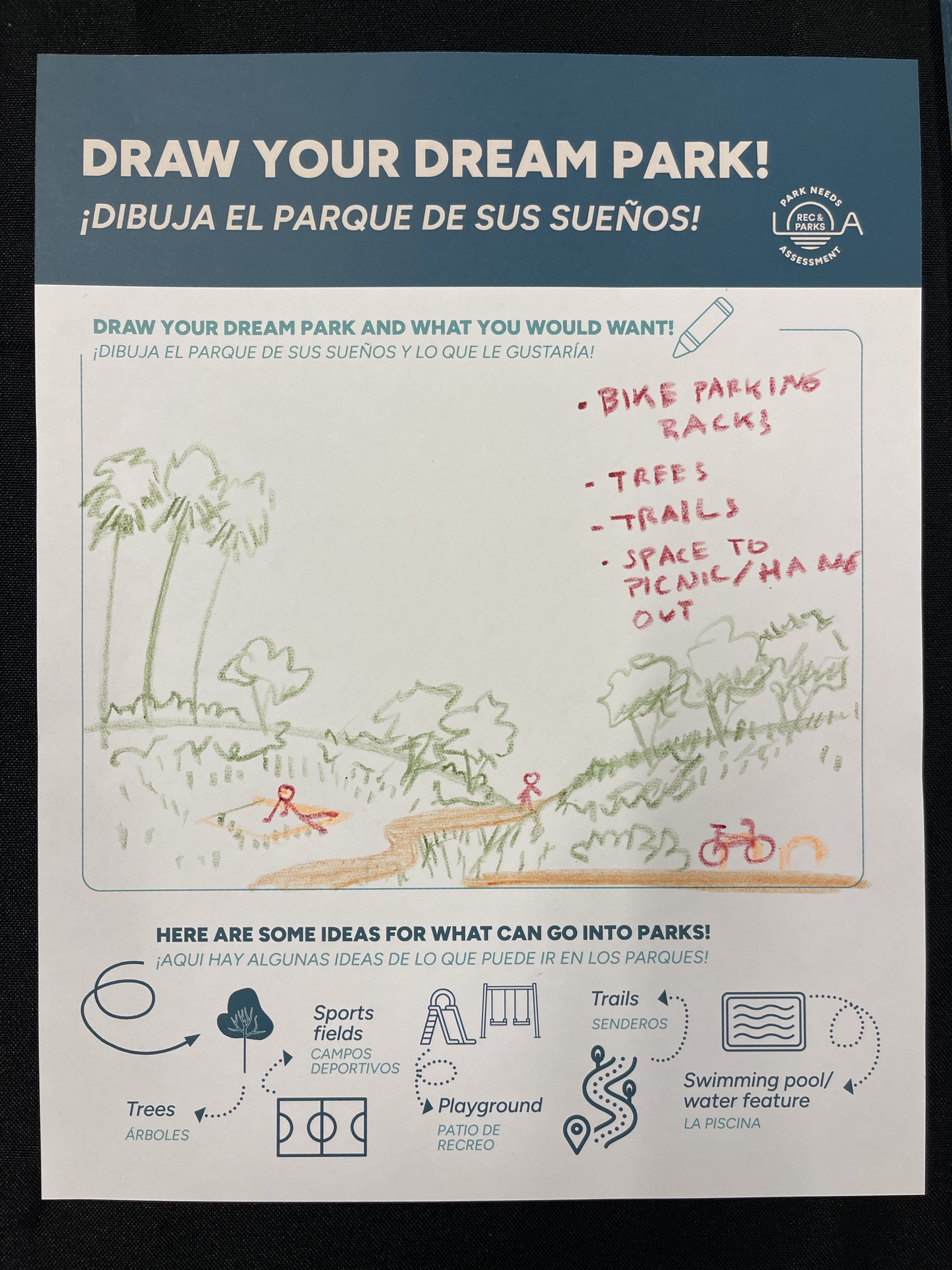
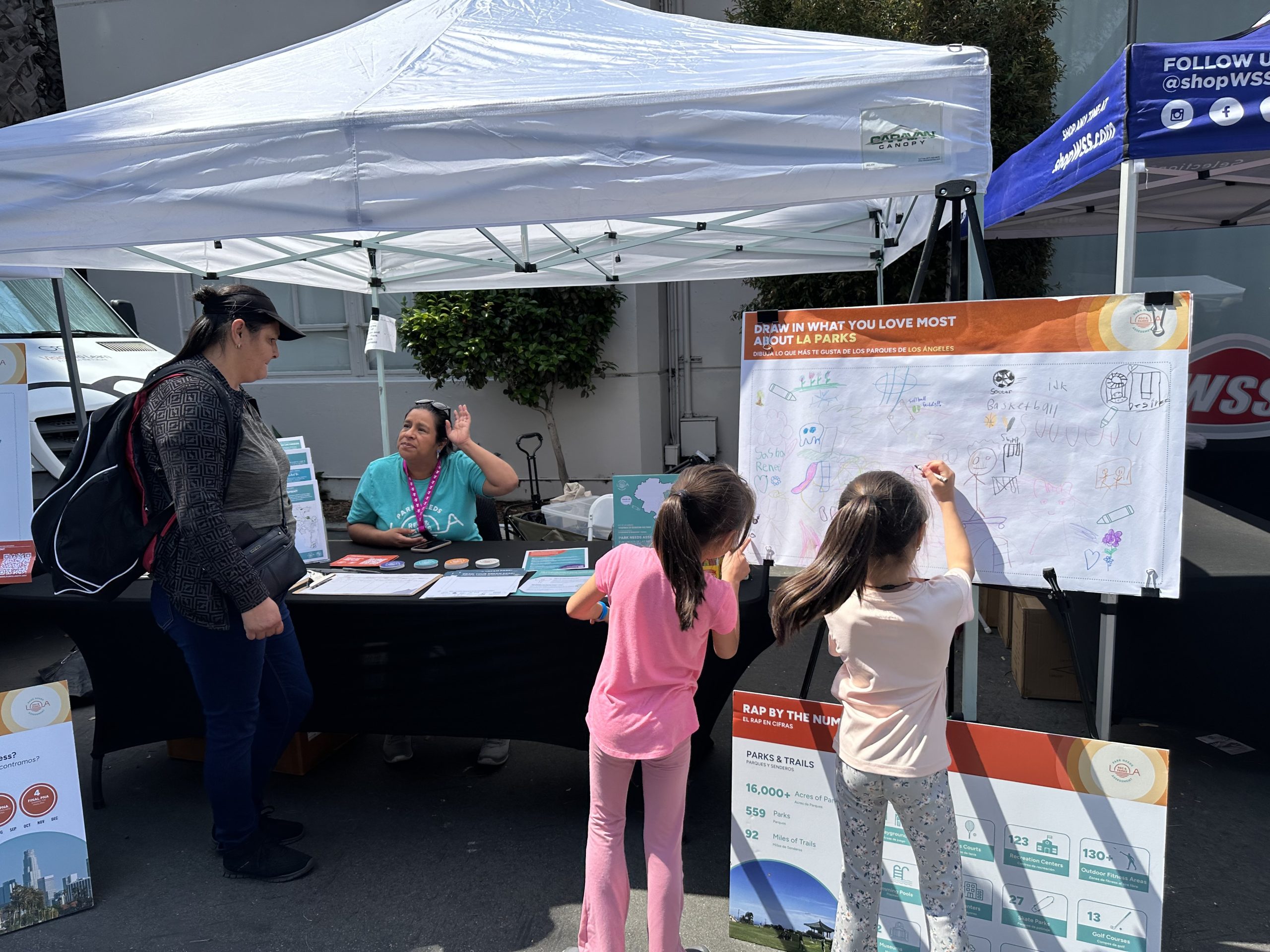
Outside of the youth-focused events, an educational activity book, “draw your dream park” activity sheet, and youth survey were available at in-person meetings, at pop-ups, and on the PNA website to explain the PNA process accessibly and gather aspirations for the future of LA parks.
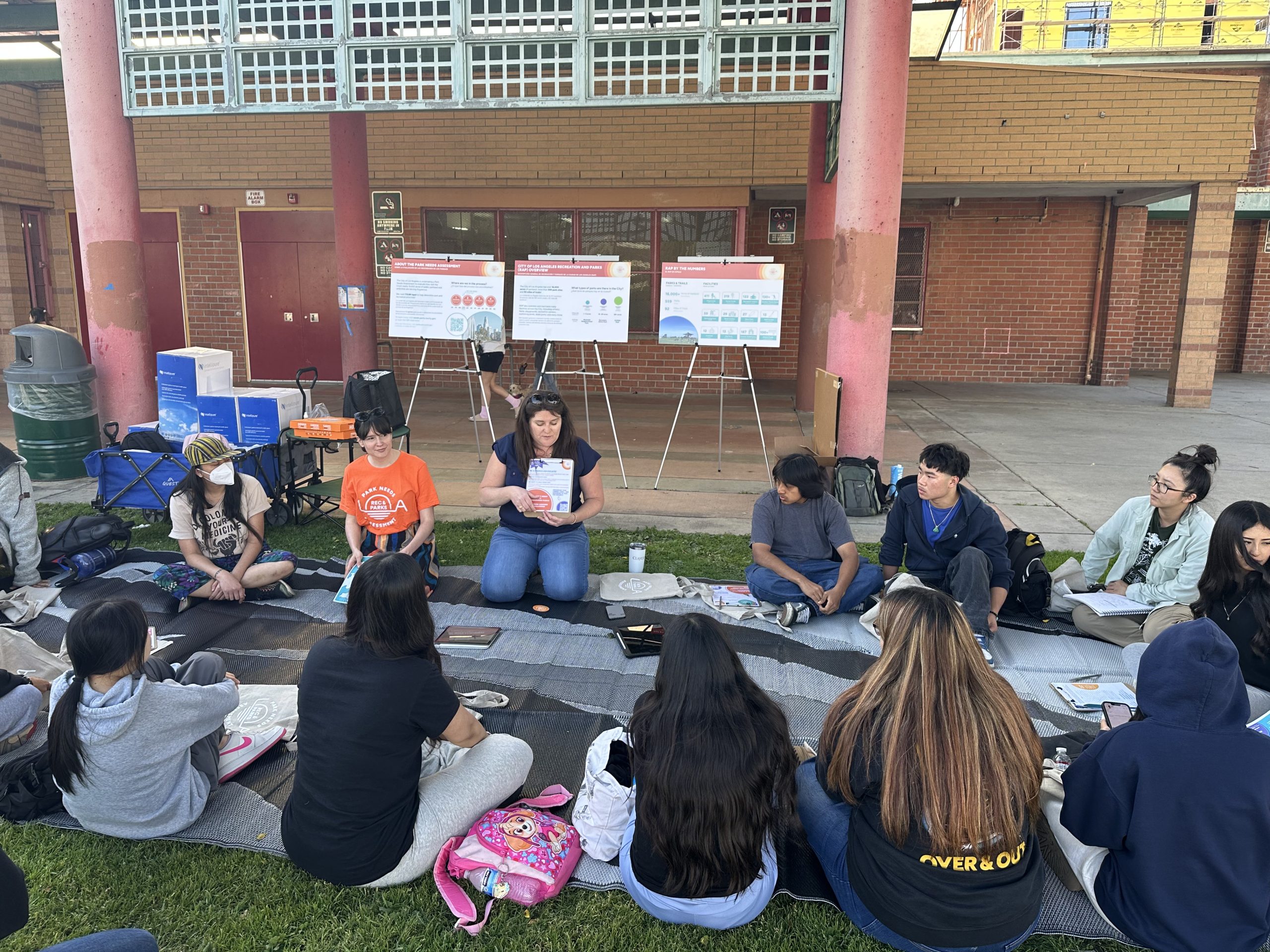
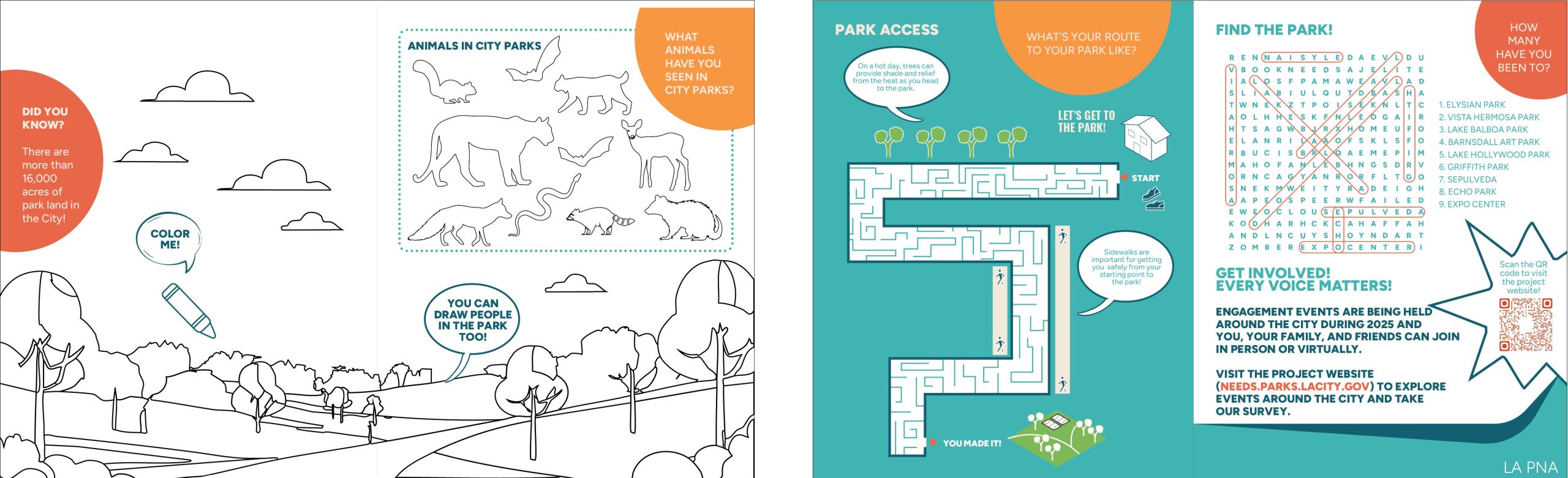
Youth activity and education materials were provided at meetings and for download on the project website.
Pop-Ups and Walkshops
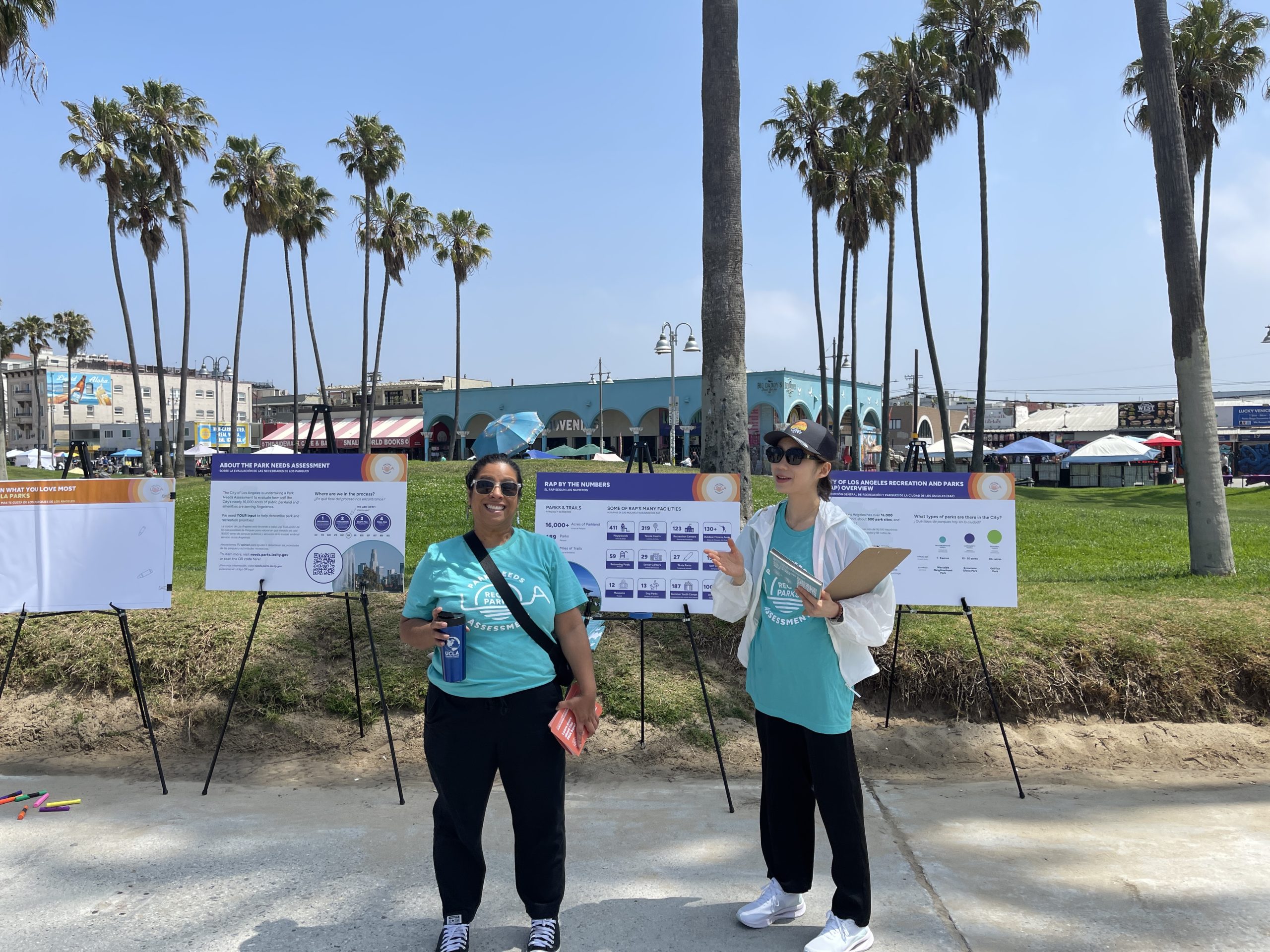
To engage a broader spectrum of Los Angeles residents, PNA team members set up information booths and tables at events occurring throughout the city, connecting with individuals in familiar and comfortable settings. These pop-ups led to spontaneous, meaningful interactions with families, seniors, students, and professionals who might not have known or had the time or ability to attend the PNA open houses.
Walkshop events held at Griffith Park, Venice Beach, and Earnest E. Debs Regional Park facilitated inclusive and representative feedback from park users in real time.
Equity Sessions
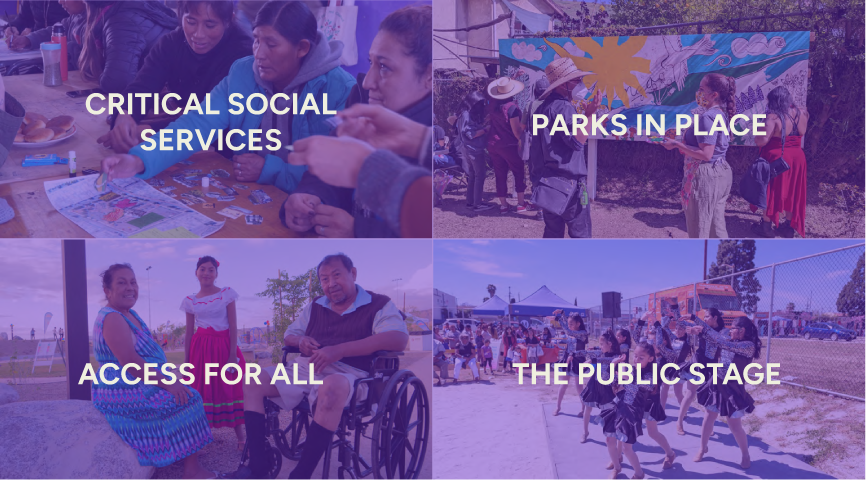
The PNA equity sessions focused on communities, issues, and groups often neglected in large planning processes. The sessions were organized around four critical lenses: Critical Social Services addressing people who use parks to access service providers like people experiencing homelessness, Parks in Place focusing on residents and vendors who access parks for economic benefit and the impacts of parks on gentrification and displacement, Access for All focusing on access and disability in parks, and the Public Stage which focused on arts and culture in parks.
In 16 equity sessions, the team met with over 30 organizations from around the City to address each of the topics, discussing their intersections and creating recommendations for the PNA guidelines. These meetings centered the lived experiences of participants to help shape more inclusive, equitable public spaces in the future. Attendees directly helped to shape components within the PNA Guidelines.
Groups involved in the Equity Sessions throughout the year include:
- Access LA
- Angel City Sports
- AARP
- Butterfli
- City of LA Department of Cultural Affairs (DCA)
- Clockshop
- Community Power Collective (CPC)
- Disability Rights California (DRC)
- DTLA Alliance
- DTLA Mobility for All
- FASTLink DTLA
- Friend of the LA River (FoLAR)
- Homeless Health Care Los Angeles (HHCLA)
- Inclusive Action for the City (IAC)
- Infinite Flow Dance
- Koreatown Youth and Community Center (KYCC)
- LA City Department of Disability (LADOD)
- LA Commons
- LA River Arts (LARA)
- LA Walks
- Move LA
- The Music Center
- Nature for All
- Northeast Neighborhood Outreach
- PACE
- Prevention Institute
- Proyecto Pastoral
- Rancho de Los Amigos
- Refresh Mobility
- Safe Place for Youth (SPY)
- Self Help Graphics (SHG)
- Strategic Actions for a Just Economy (SAJE)
- Tia Chucha’s Centro Cultural & Bookstore
Analog & Digital Resources
Social Media
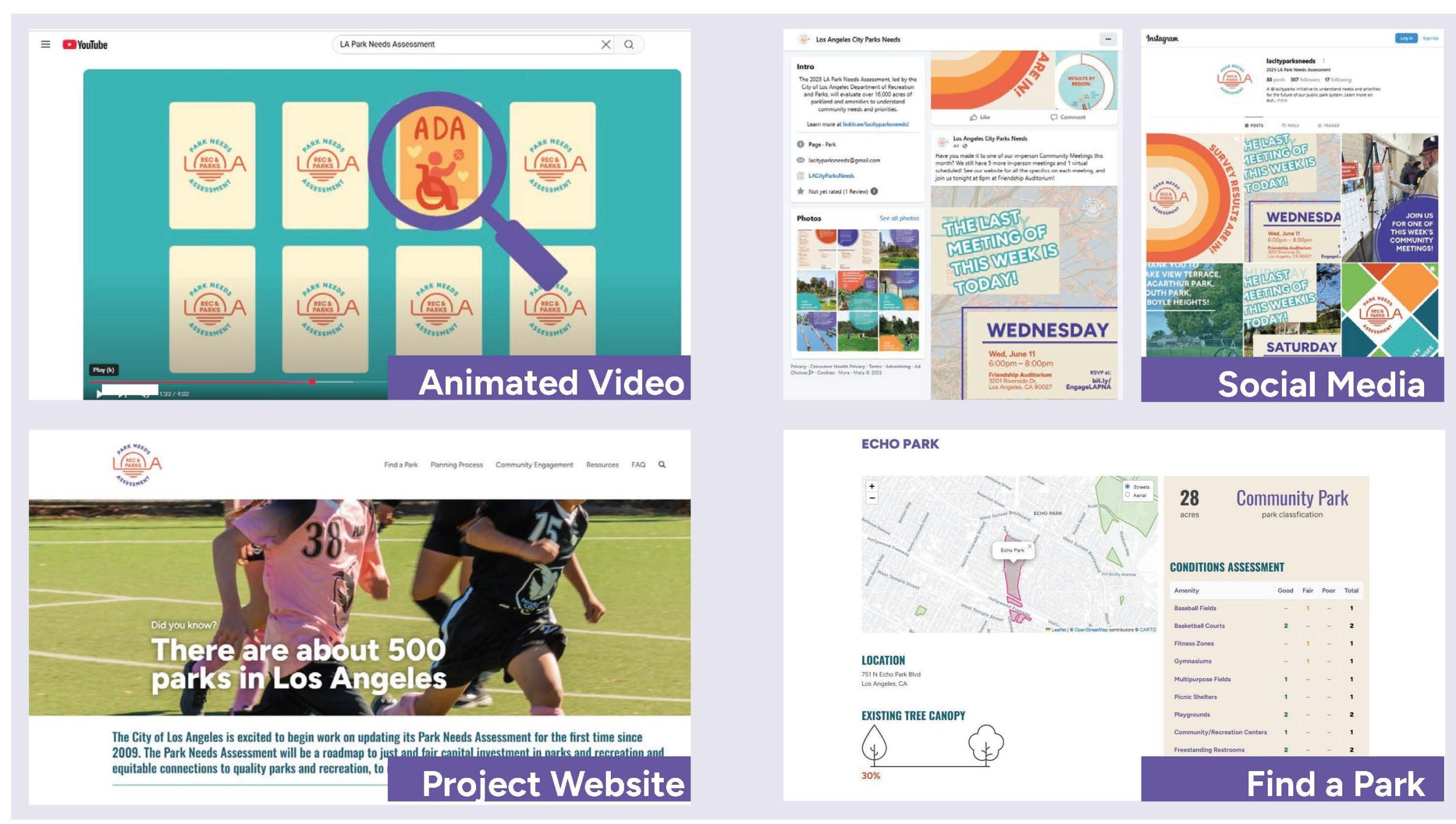
RAP and PNA-specific Instagram, Facebook, LinkedIn and YouTube accounts were used to keep residents informed and engaged. Posts included images, videos, and information about the survey and community meetings, and served as a call to action for community members interested in sharing feedback about city parks.
Print Outs and Analog Information
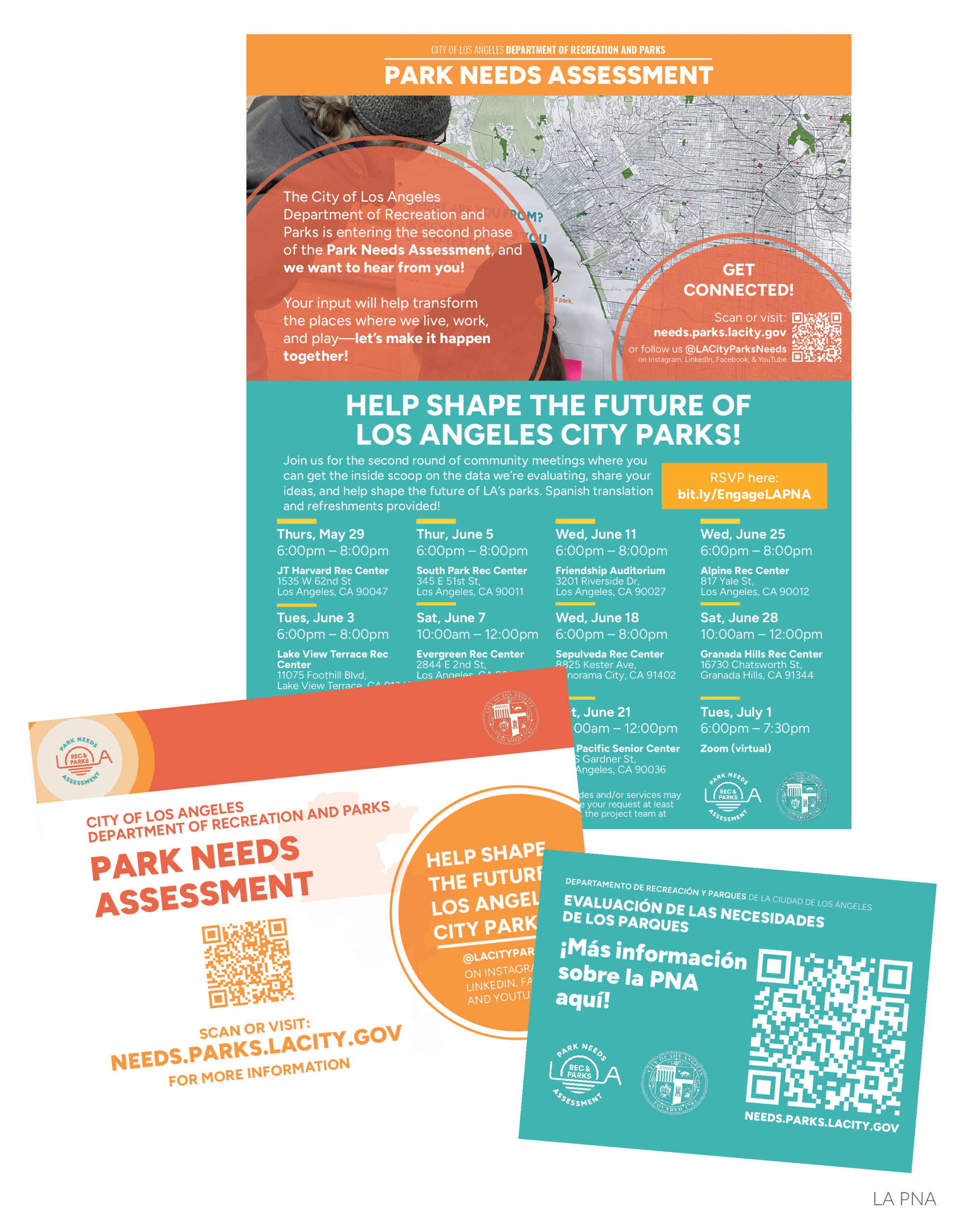
Flyers, mailers, QR codes, lawn signs, banners, and posters were distributed to recreation centers and local businesses near community meetings. These materials contained information about community meetings and the overall project. The flyer was available in double-sided English and Spanish, Mandarin, Armenian, and Korean.
Project Website
The PNA website (needs.parks.lacity.gov) served as an engagement hub with project information and digital surveys, continually updated throughout the PNA’s development. Now that the PNA is complete, the website has turned into an interactive version of the final PNA itself.
COMMUNITY PARTNER PROGRAM
To reach an even larger audience, 12 community partner organizations with existing networks were tasked with reaching out to their constituents to engage them in the PNA process. These groups attended events and shared information on how to provide input at over 100 events and outreach efforts throughout the year.
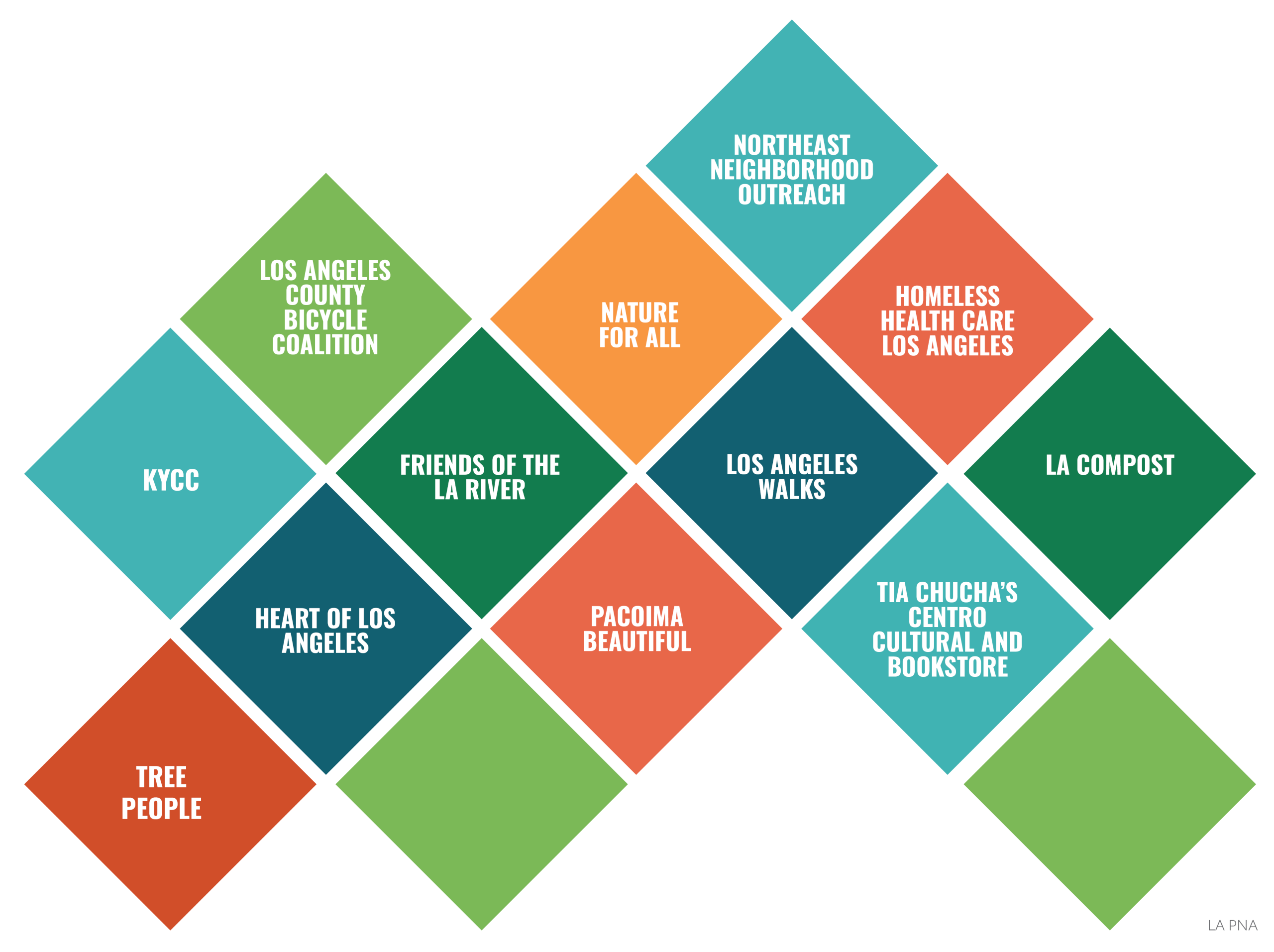
The community partner organizations for the PNA included:
- Friends of the LA River
- Heart of Los Angeles
- Homeless Health Care Los Angeles
- Koreatown Youth + Community Center (KYCC)
- LA Compost
- Los Angeles County Bicycle Coalition
- Los Angeles Walks
- Nature for All
- Northeast Neighborhood Outreach (NENO)
- Pacoima Beautiful
- Tia Chucha’s Centro Cultural and Bookstore
- TreePeople
Community partner groups extended outreach to increase awareness and resources for the Park Needs Assessment.
Agency, Non-Profit, and Community Advocate Coordination
Technical Advisory Committee
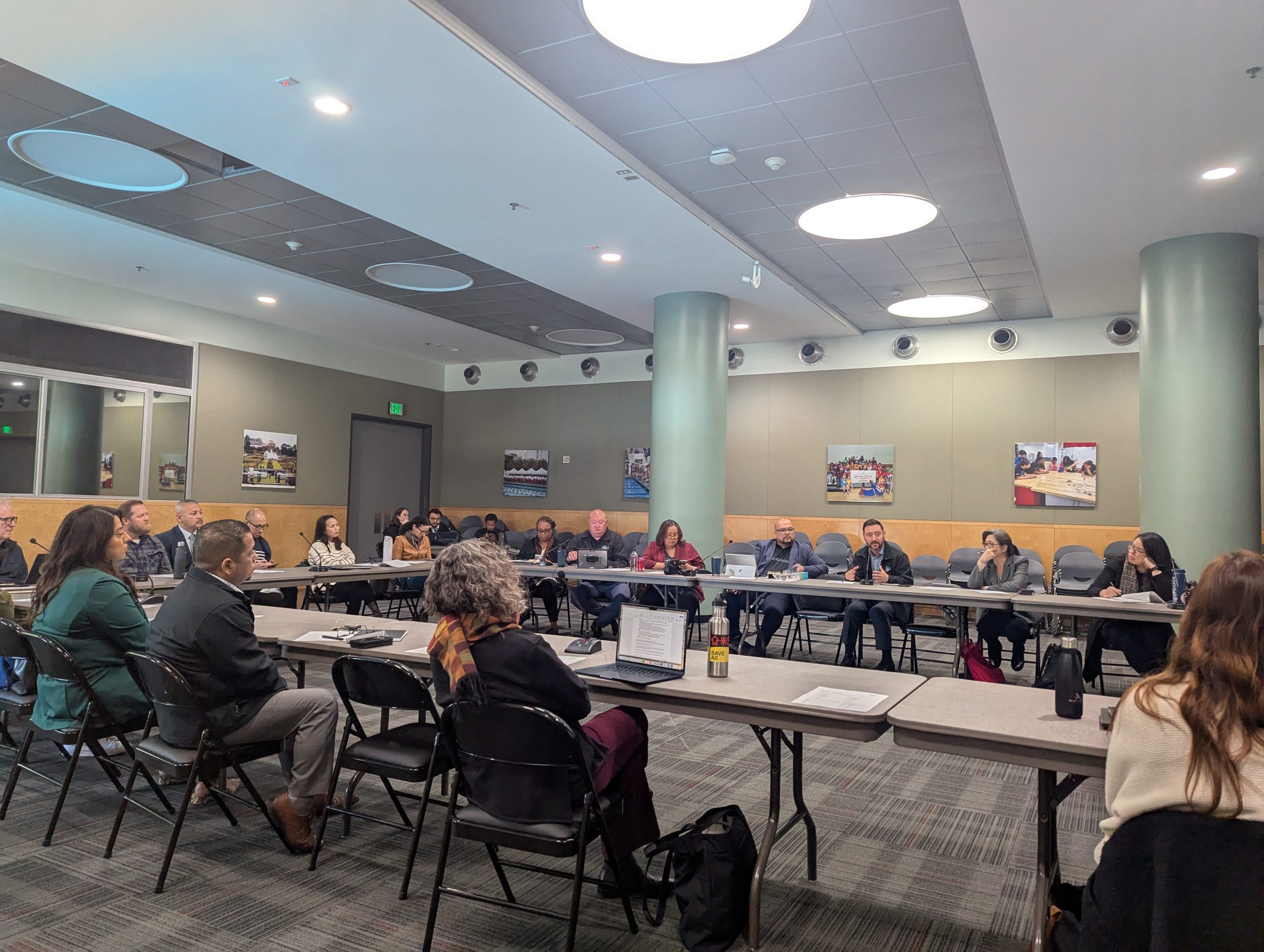
City and County agencies, local technical and institutional leadership, as well as elected officials’ staff, were invited to participate in a Technical Advisory Committee (TAC) that met at three key milestones to provide technical feedback on the Park Needs Assessment. A full list of Technical Advisory Committee members is provided in the acknowledgments at the beginning of this document.
Steering Committee
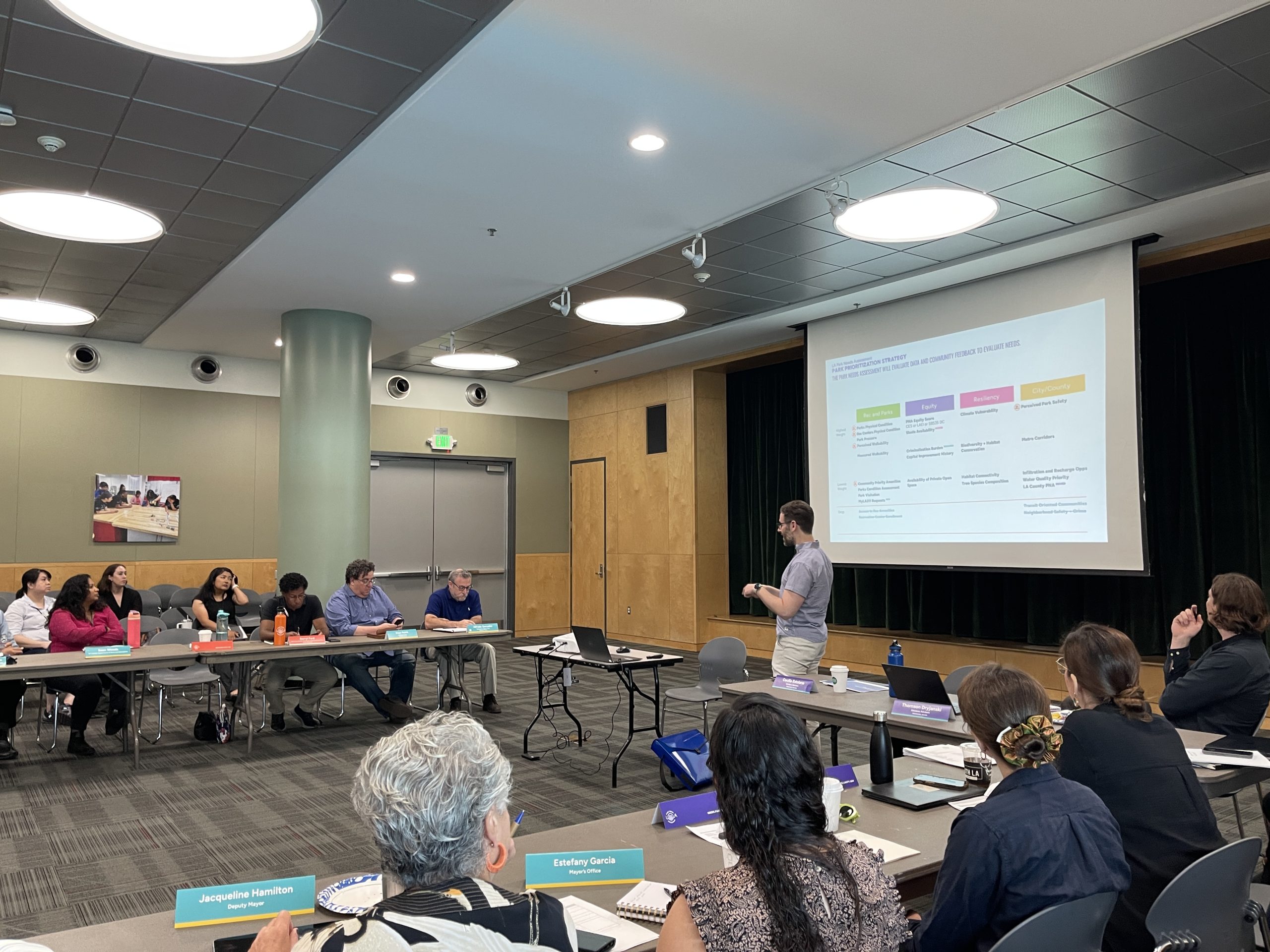
The PNA Steering Committee was composed of a cross section of park advocates, interest groups, and leadership from the City and RAP. This group met at seven key milestones to review findings and give direction to analyses and recommendations. A full list of Steering Committee members is provided in the acknowledgments.
NEIGHBORHOOD COUNCIL REPORTS
Neighborhood councils across Los Angeles were invited to submit short reports on local park conditions and priorities as part of the PNA outreach effort. Reports were requested to focus on each council or neighborhood’s significant challenges and opportunities to provide insight into their lived reality. This outreach aimed to gather geographically specific insights to inform the PNA, as well as provide information to Council Districts, decision makers, and RAP. Twelve neighborhood councils submitted reports which can be found on the downloads page.